
Before sending her models down the runway, British-Nigerian designer Oluwakanyinsola Onalaja appeared on a screen recounting an all-time low. Three months ago, a fire destroyed Onalaja’s studio, sending more than a decade’s worth of work up in flames.
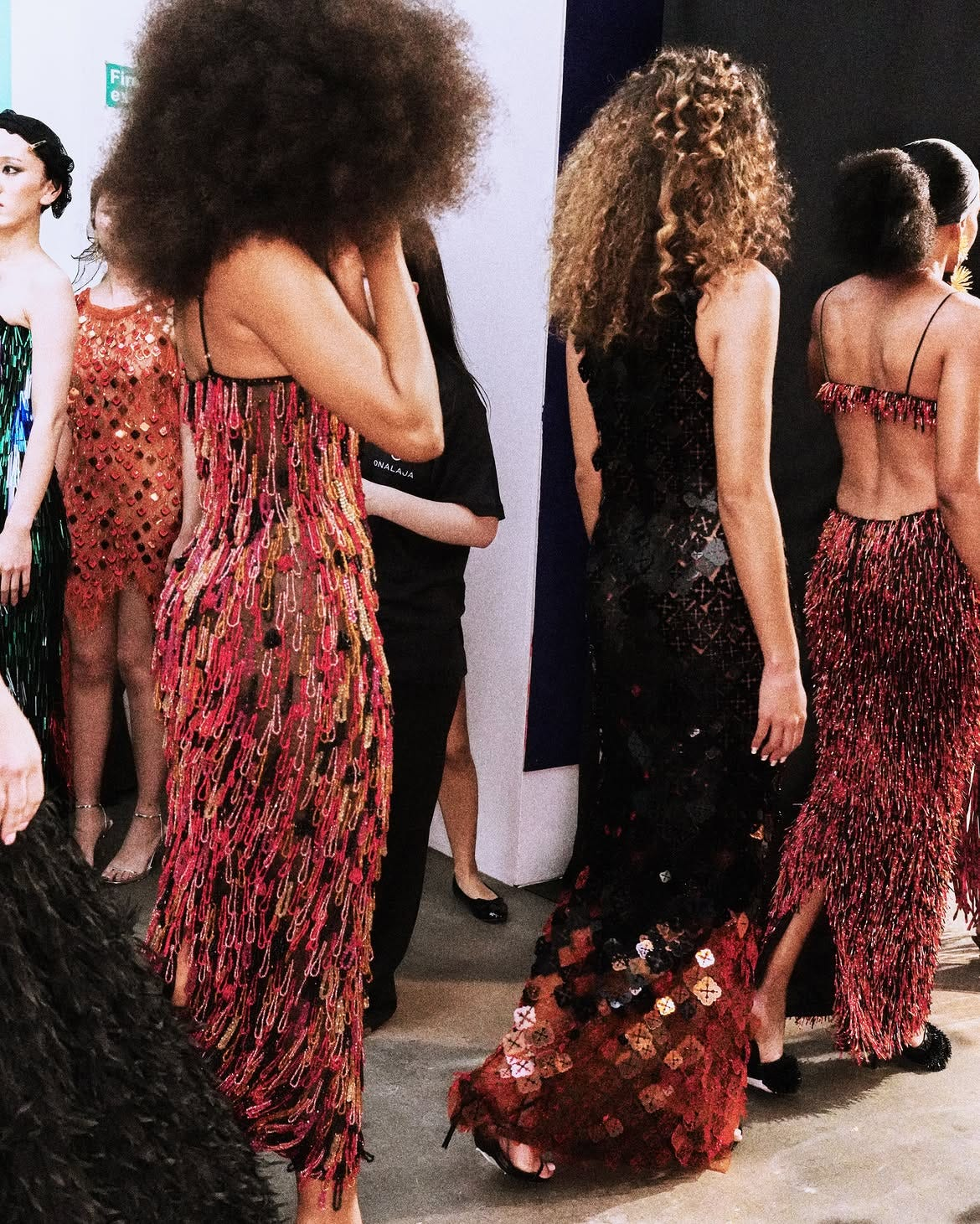
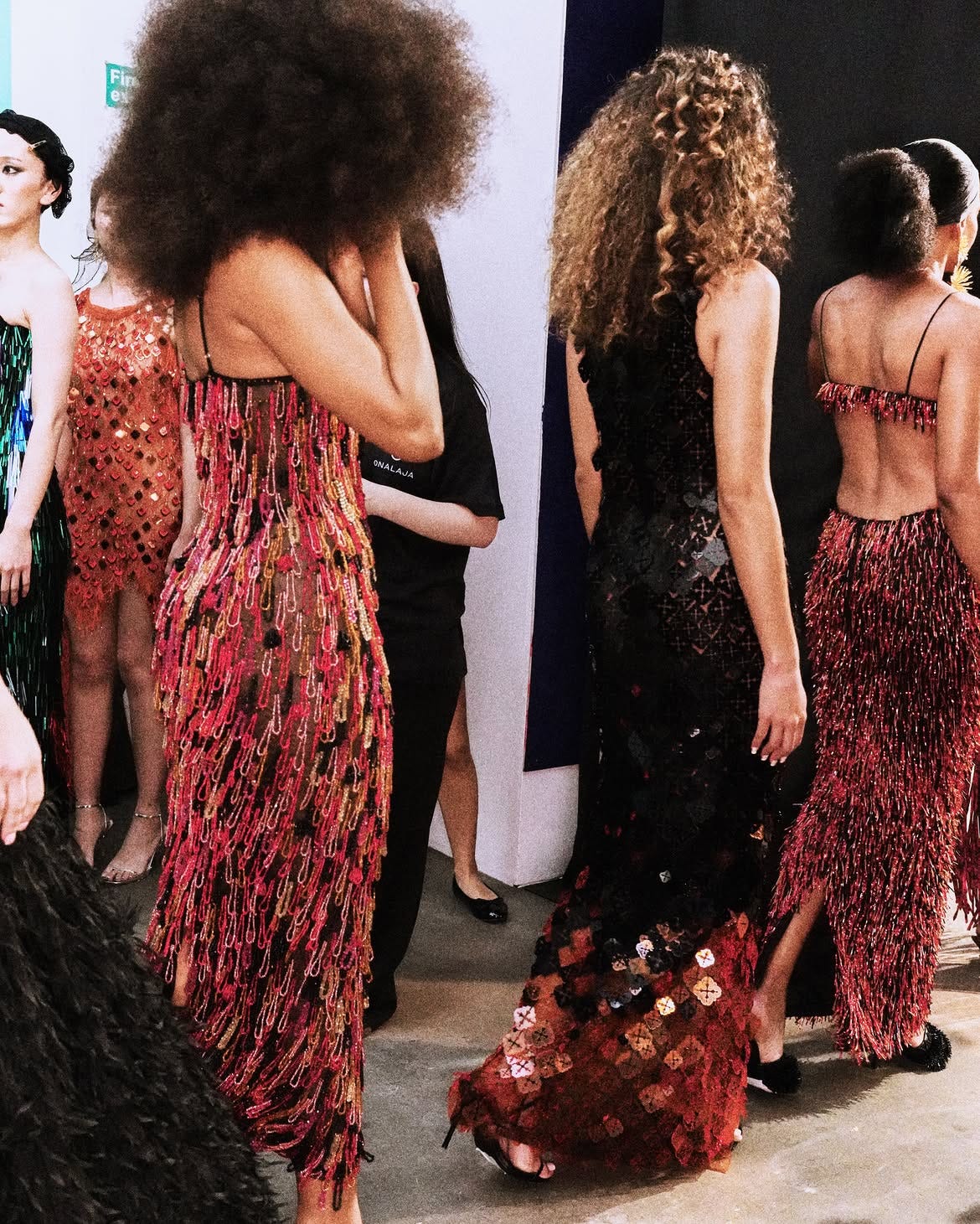
The team began a race against time to produce a new collection for the brand’s first official London Fashion Week show. The result was a glamorous defiant comeback. From the start of the show, Onalaja served the audience with the dresses that built her reputation — maximalist, embellished, and flattering.
Onalaja, whose gowns have been worn by the likes of Tems and Olivia Dean, showed that her designs excel in accentuating movement. Fringe swished with the models, while spangled dresses soundtracked their walks with clanking rhythms.
The first set of outfits came in lush orange and red tones, reminiscent of the blaze that nearly ended it all. Then came white, black and gray — still flamboyant, but this time the subdued tones conveyed an air of devastation. Finally, a spectrum of color burst onto the runway, signifying a beautiful rebirth.
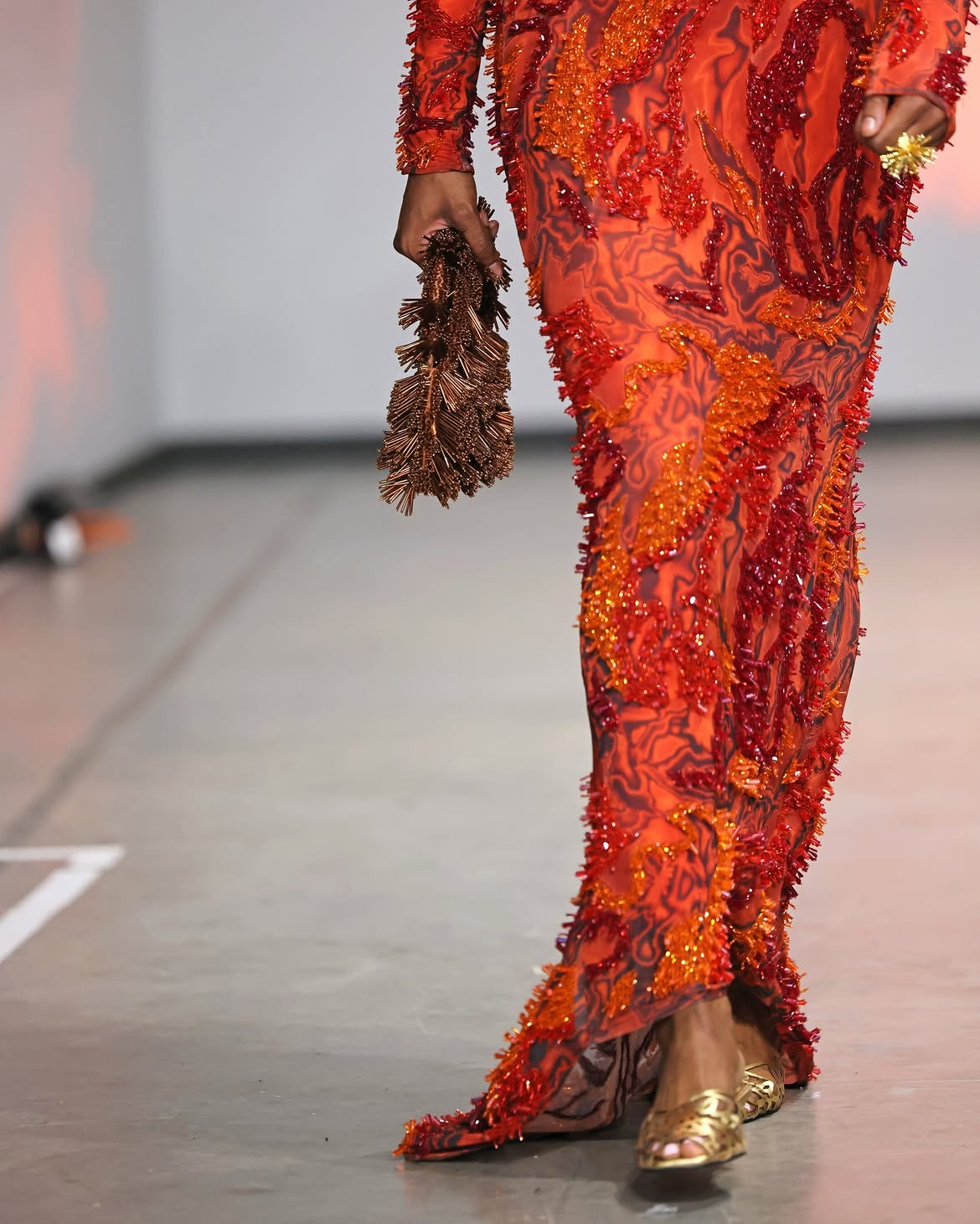
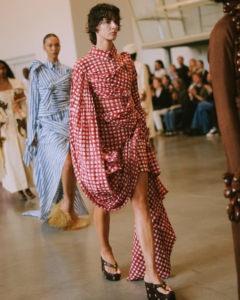
While the story was evocative, Onalaja could have stretched its stylistic boundaries more. Where can the brand go beyond sexy, embellished outfits? The show’s strongest looks were the few that attempted to answer this question; the barely-there mini dress with a huge train attached, the feathered wedding gown, the wrap dresses assembled from 70s-like patterned ribbons.
The models themselves enhanced Onalaja’s sophisticated identity, though for a brand that prides itself on size inclusivity, it was a shame that the runway did not fully reflect it.
Despite all this however, the audience left knowing exactly who the Onalaja woman is. As the models re-appeared together for the final walk, there she was for all to see, the resilient, head-turning, and gutsy image of rising from the ashes.
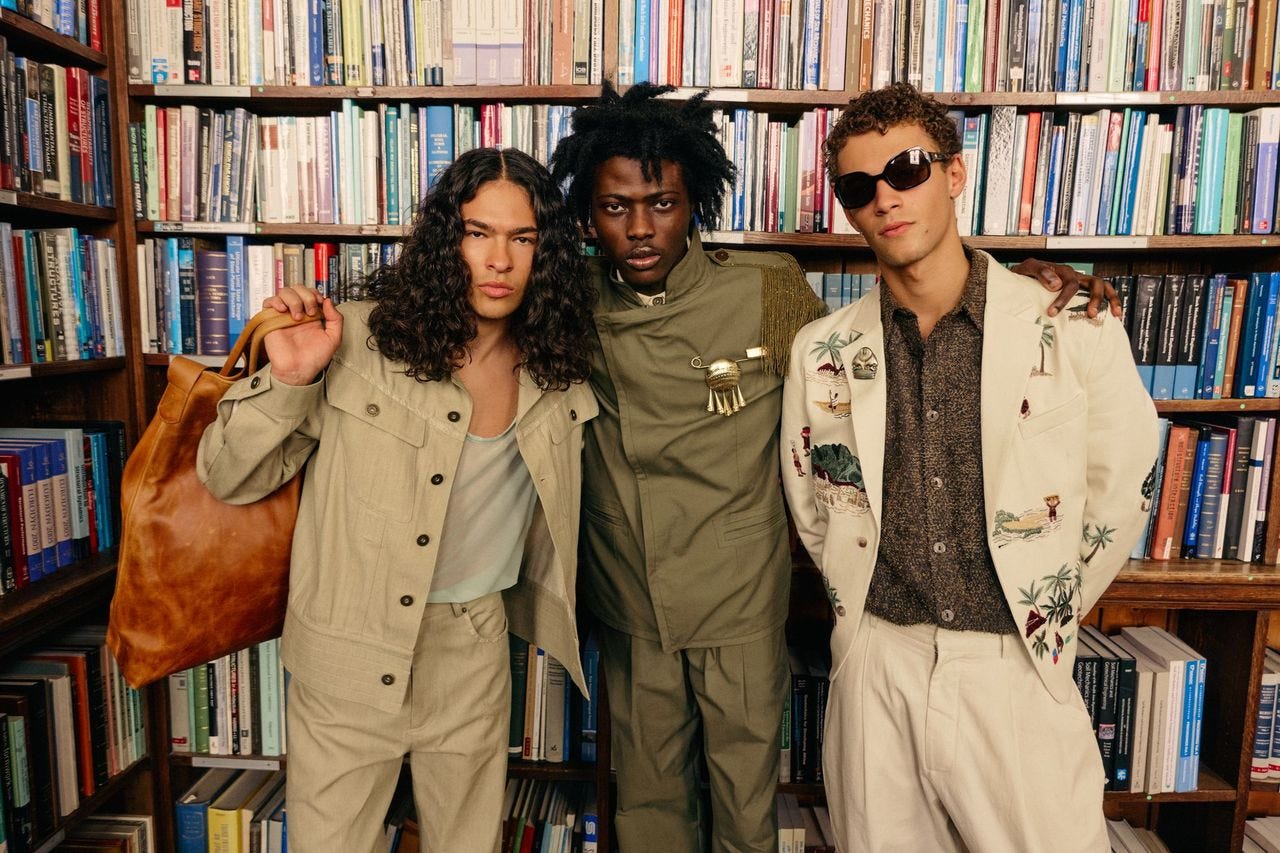
British-Sierra Leonean brand Labrum set their SS27 show in a grand Edwardian hall, minutes away from the seats of the British government and monarchy. This was no accident. Named “Hands of Osmosis”, the show was the final instalment in a trilogy exploring how the movement of people shapes the established culture of a new land. The first two instalments focused on music and textiles. This time, Labrum zeroed in on craft and how it moves between people and places across time and generations.
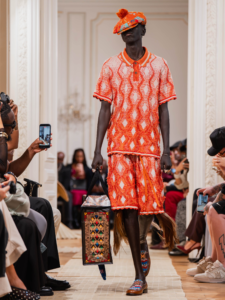
Resort-inspired co-ords featured idyllic, hand-embroidered scenery of village life — an homage to founder Foday Dumbuya’s grandmother who worked at a market in Sierra Leone. Elsewhere, a pair of burgundy raffia trousers, made by Indian craftspeople, transposed layering traditions to the ornate Westminster hall.
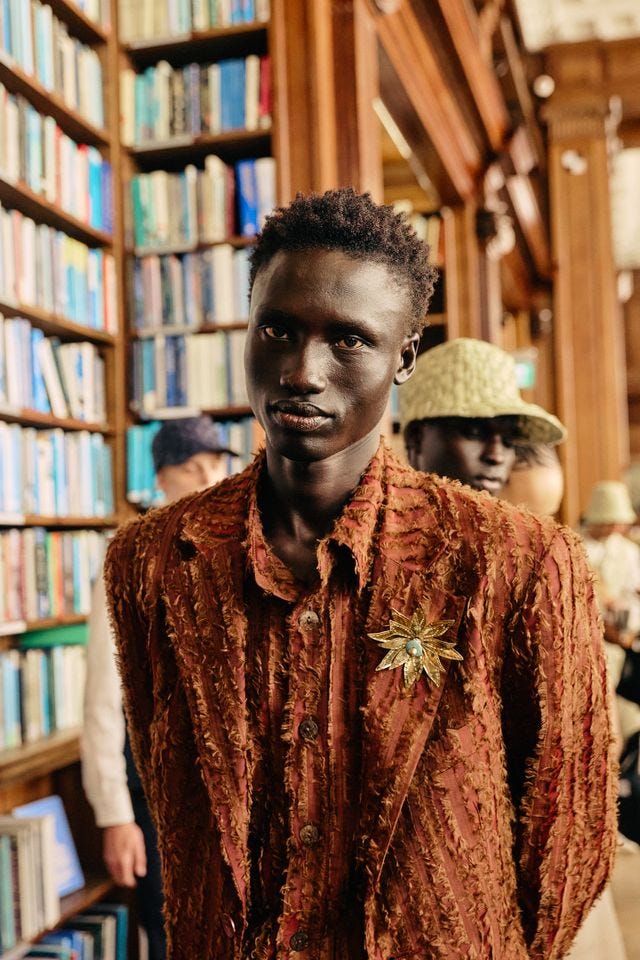
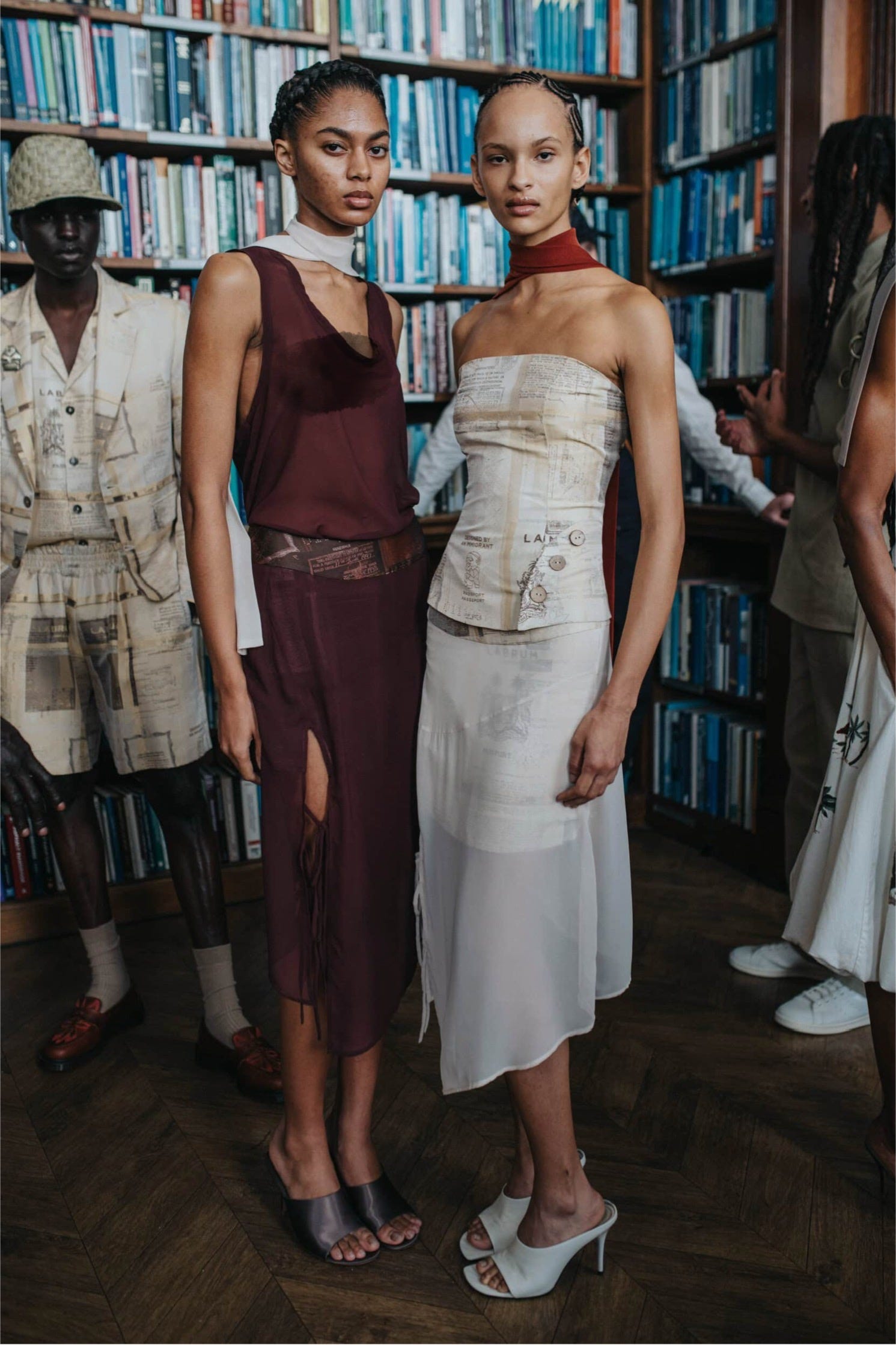
And of course, there were the Labrum hallmarks including idiosyncratic prints and textures that helped Dumbuya win the 2026 British Fashion Council/GQ Designer Fashion Fund award in June.
Labrum’s signature passport print, a montage of relatives’ travel documents made a welcome appearance, while lightweight fil coupé suits once again showed off Dumbuya’s sleek tailoring.
Influenced by African-American artist Jacob Lawrence — who’s renowned for his striking use of colour and figures depicting everyday life, Dumbuya ramped up the colour for this finale. By setting royal blues against rich yellows, caramel browns against deep indigos, Labrum achieved a similarly vibrant effect.
This narrative of craftsmanship and travel hit a snag when Olympians Daryll Neita and Samuel Reardon took to the runway dressed head-to-toe in Labrum’s latest collaboration with Adidas. The sports gear clashing stylistically with the rest of the collection disrupted the rhythm of the show.
Accessories though were among the highlights, particularly the cross-body leather bags that were shaped like traditional West African clay vases.
Through these distinctive, yet wearable designs, Labrum’s latest collection presented the brand’s closing statement for the Osmosis trilogy. Craft, and therefore culture moves with people. It’s a fluidity worthy of celebration.
That’s all for now. Thanks for reading this edition of Africa Fashion Decoded.