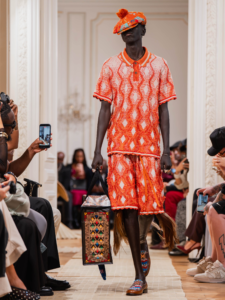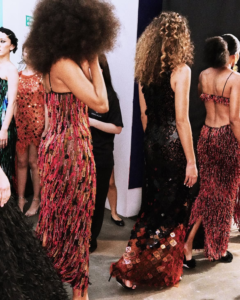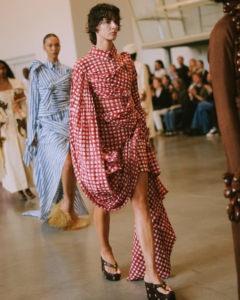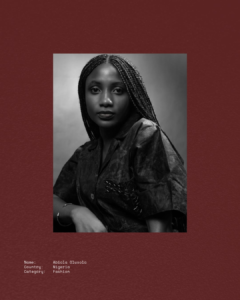

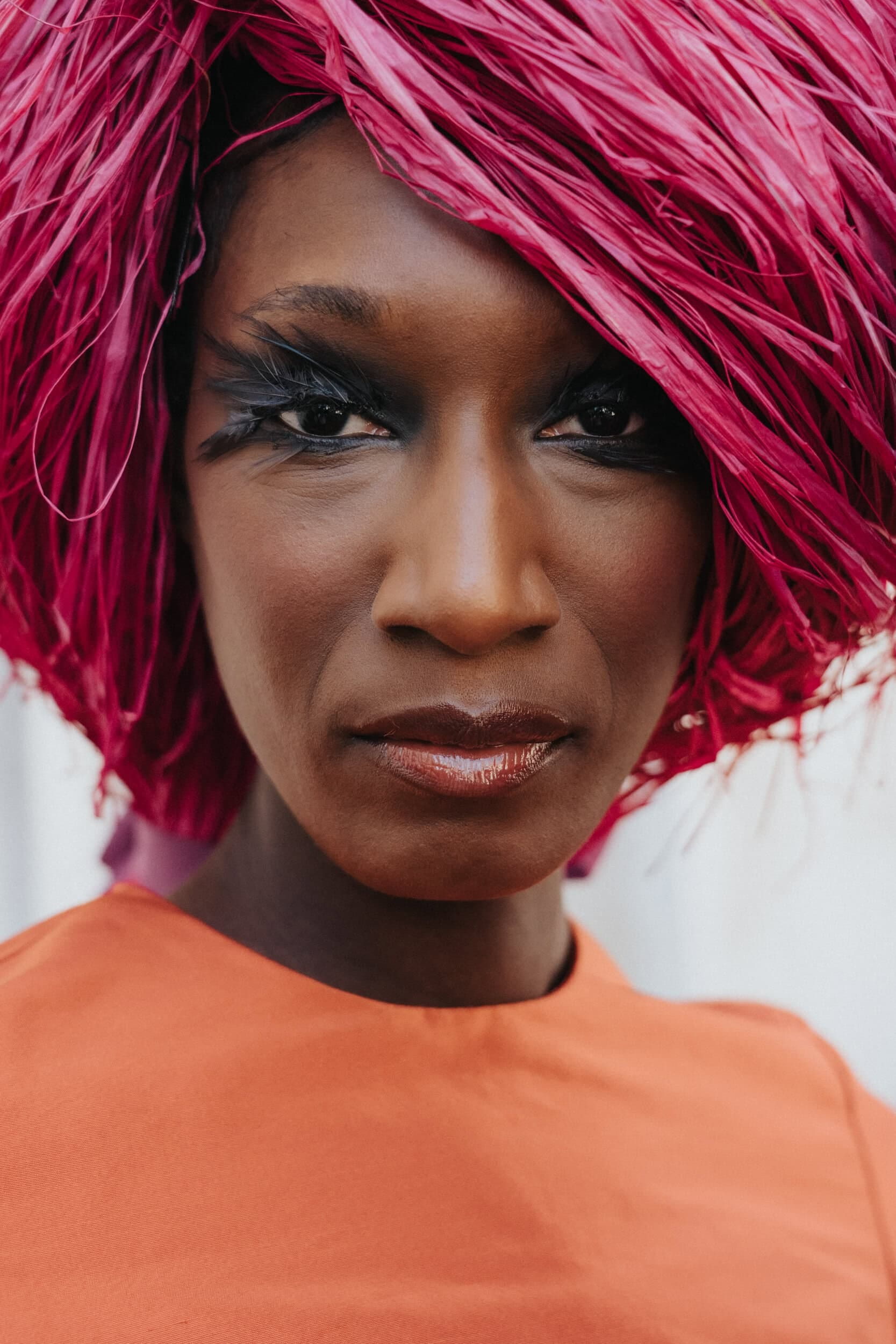
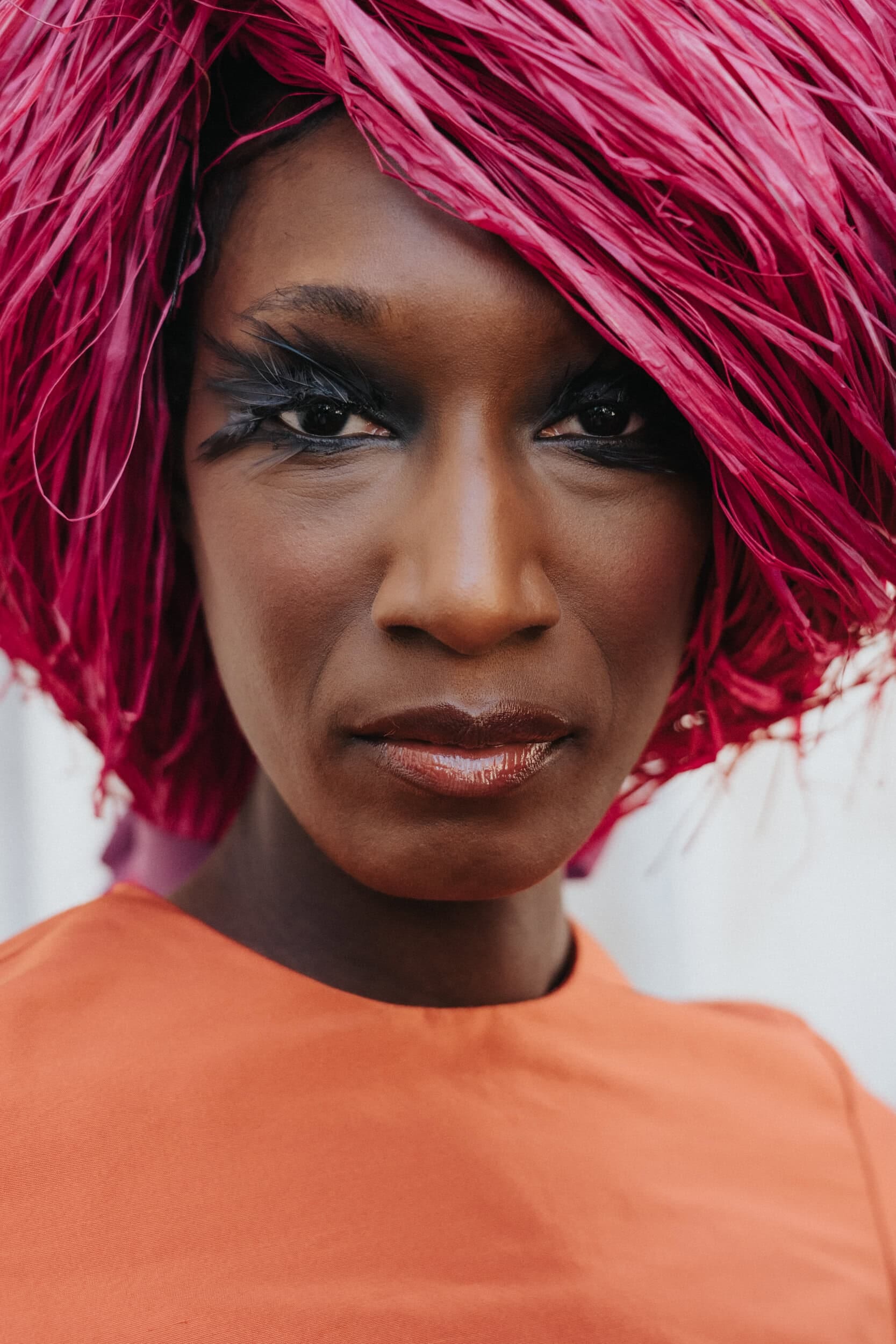
In January 2020 at the start of fashion week season and exactly a week before the World Health Organisation declared the COVID-19 pandemic a public health emergency, Imane Ayissi, the Paris-based womenswear designer became the third African designer and first from Sub-Saharan Africa to ever showcase at Paris Haute Couture Week.
Invited by French fashion’s governing organisation, the Fédération de la Haute Couture et de la Mode, the show, left both the designer and his audience in tears. Until that moment, Ayissi had presented his collections independently.
For context, haute couture is considered the highest form of fashion and only a select number of brands and fashion houses have official couture status and are invited to officially showcase their collections in Paris each season.
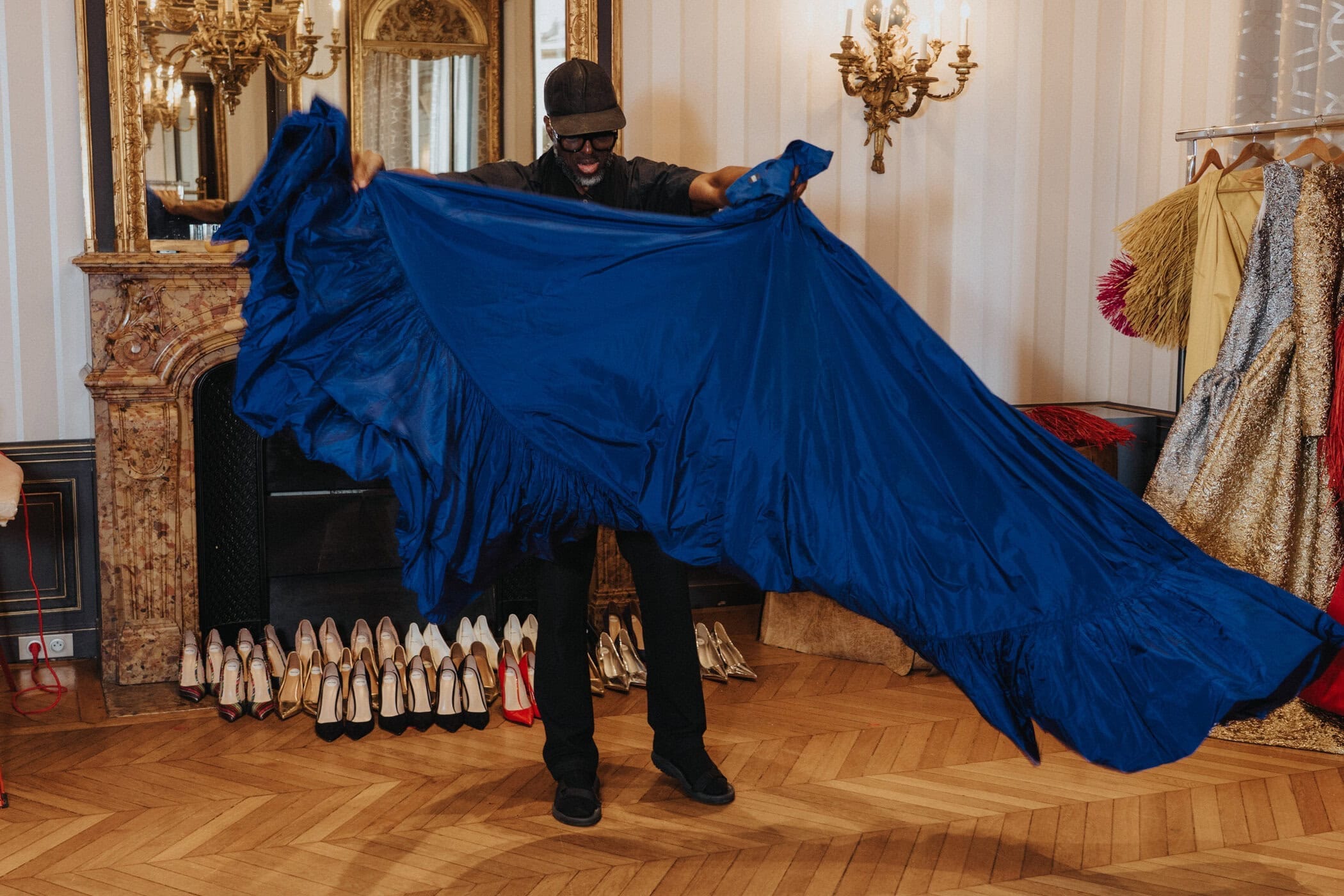
A native of Yaoundé, Cameroon, where he was born and raised, Imane Ayissi was introduced to the fashion world from a young age. Ayissi’s mother, from whom he discovered fashion is a former beauty pageant queen, and Imane Ayissi himself was a dancer for the Cameroon National Ballet, a stylist who worked for the renowned Cameroonian designer JE Essomba, and a model who walked for the likes of Dior, Lanvin, and Saint Laurent in the early 90s.
Renonwed for his graciously sophisticated designs which are often crafted from natural African fabrics, his work emerges as a powerful statement across the industry. Today, the designer is shifting global conversations around the significance, duality, beauty, and quality of African textiles one garment at a time.
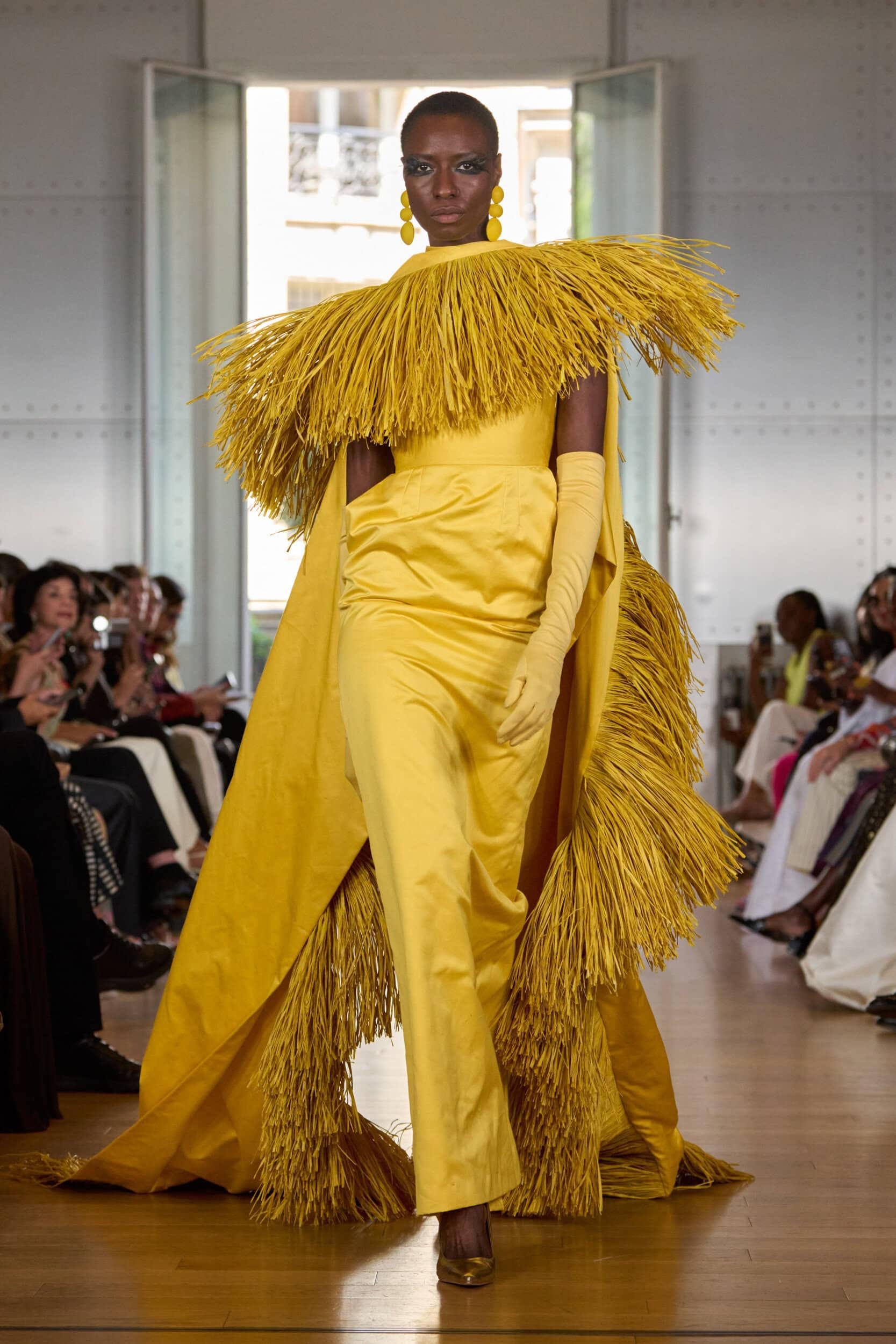
Ayissi’s collections blend “Parisian allure,” the designer’s head of studio, Jean-Marc Chauve explains — with what Ayissi describes as African elegance. Always looking to indigenous fabrics and processes for inspiration, his gowns command respect.
They are are characterized by richly symbolic pieces constructed for movement, dilaogue, and appeal. Even the seemingly simpler looking designs are peppered with enganging elements be it the details, shapes or technical precision. Consider a cocktail dress in wild raffia or evening gowns with obom (a fabric made from tree bark) embellishments.
Interpreting his collections further, Chauve, says “Ayissi doesn’t see garments as abstract objects or a matter of volume and lines, for him it has to be related to a body, and the way the fabric will move when walking. What the clothes show or hide of the body is central in his work.”
With stereotypes on African fashion and the continent in general still largely portrayed in Western media, selling the idea of African luxury in Paris can be a tricky reality. Still, Ayissi is up for the challenge.
“I want to show that African craftsmanship is the future [of] the western industrial system in terms of sustainability and social issues,” he states.
In the past, he has openly spoken about his dislike for the colonial Dutch wax fabric that populates the continent and has become deeply embedded in African culture. It’s with the same candour and defiance that he approaches his design process, often emphasising materials rarely seen in the couture world as we know it.
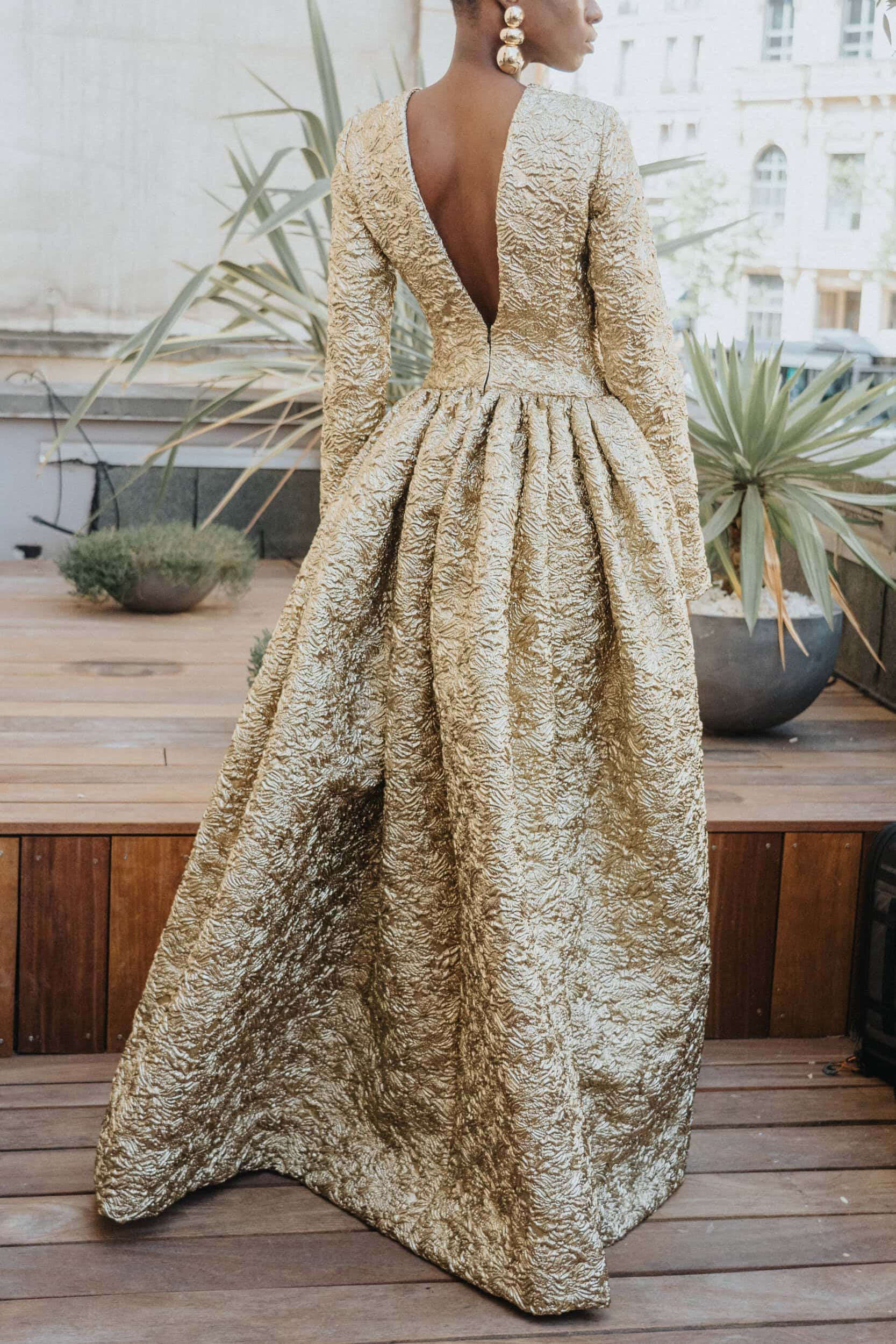
Looking back, Ayissi doesn’t recall a specific date of when he established his label. Though he officially incorporated his brand in 2004, he had spent years prior making made-to-order clothes for his peers. “I started to create garments for my friends and clients while working as a dancer and model,” he reveals.
And after more than two decades in the industry, he cites his undeniable passion for fashion as one that exceeds making beautiful clothes. It’s partly activism to foster new perspectives and narratives. “[I’ve learned that the fashion industry is a powerful system with its own rules, and if you want to challenge it or introduce new voices, you must first enter the system, understand its rules, and make [changes] from the inside”, he reveals. If you want to create your little system, you just stay invisible,” Ayissi adds.
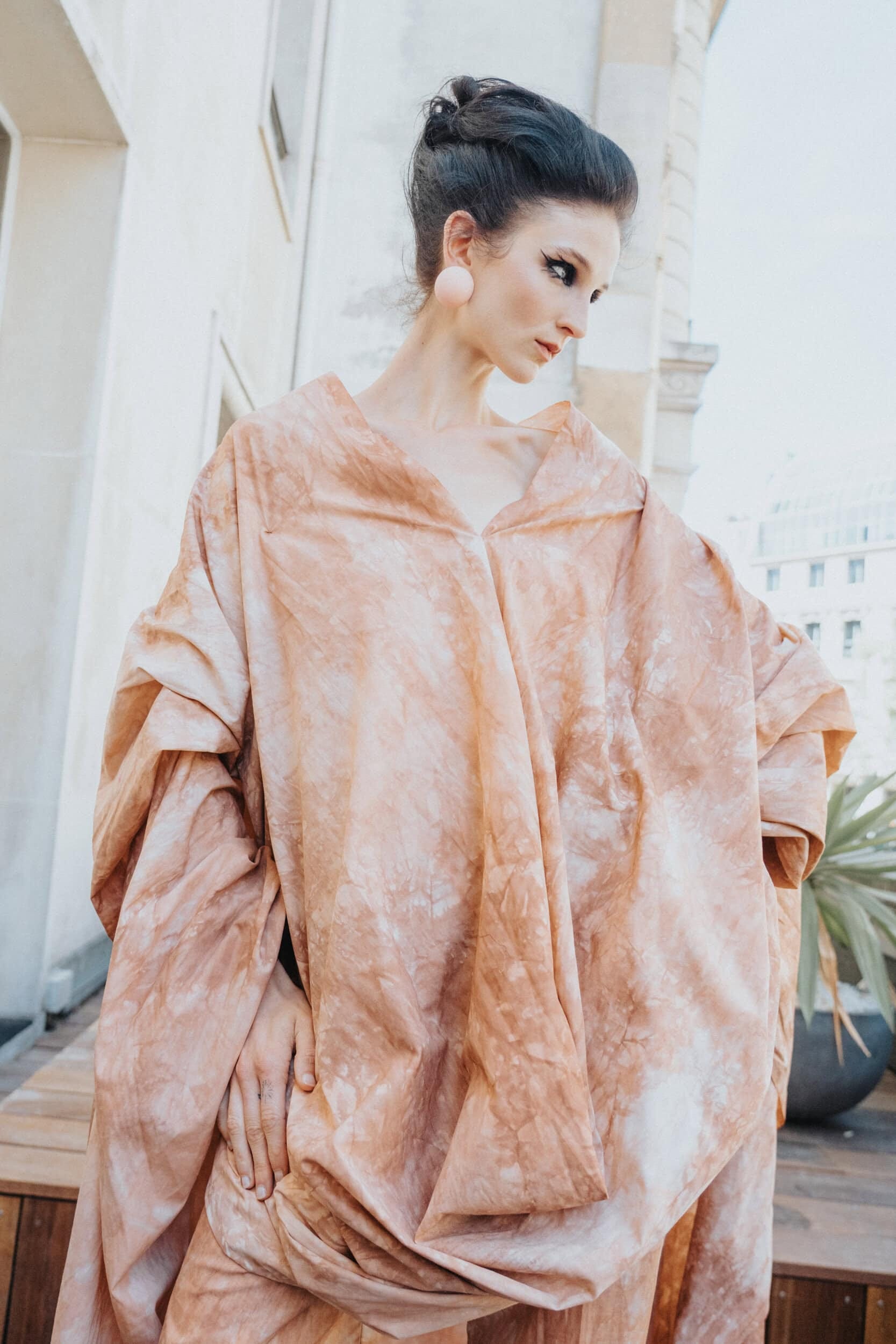
The designer’s long-term goal is to continue championing African textiles in both couture and ready-to-wear. When asked what he hopes people could learn from his work, Ayissi responds: “I would like people to see that African craftsmanship is as sophisticated and beautiful and luxurious as European or Asian craftsmanship. African aesthetics are becoming more popular, but I see that for people in Europe, USA and China, it’s still difficult to link what comes from Africa with the idea of luxury.”
Now that he’s an FHCM approved couturier, with three seasons to show for it — a goal that took years to achieve Ayissi is setting his eyes on a new agenda. “Right now, I want to develop my ready-to-wear line,” he declares in conclusion.
This article was first published in 2021.
Thanks for reading this edition of Africa Fashion Decoded.