
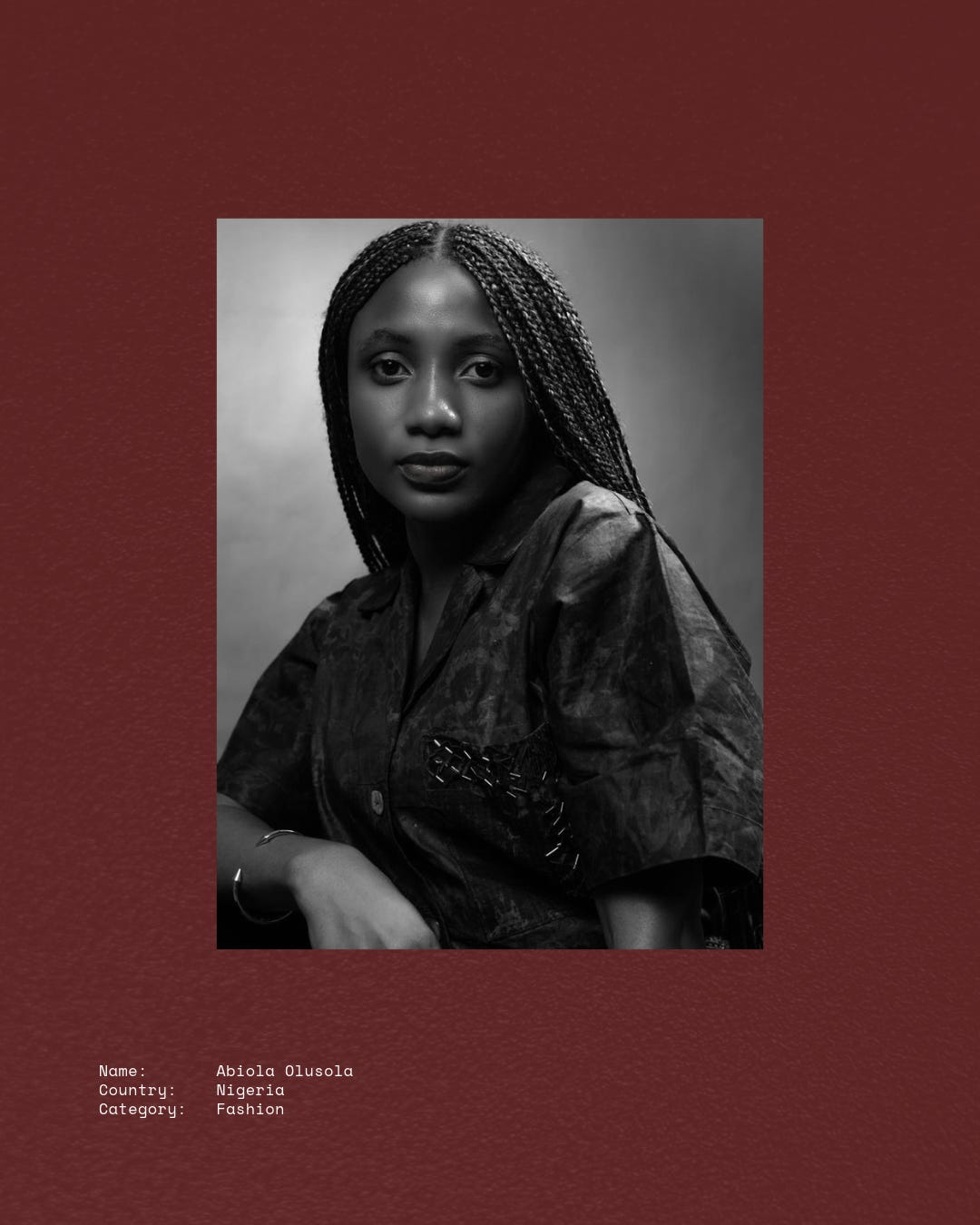
Interviews is a brand new series celebrating the most compelling voices in African fashion, design, and culture. For our debut edition, Innocent Ndlovu chats to Abiola Olusola.
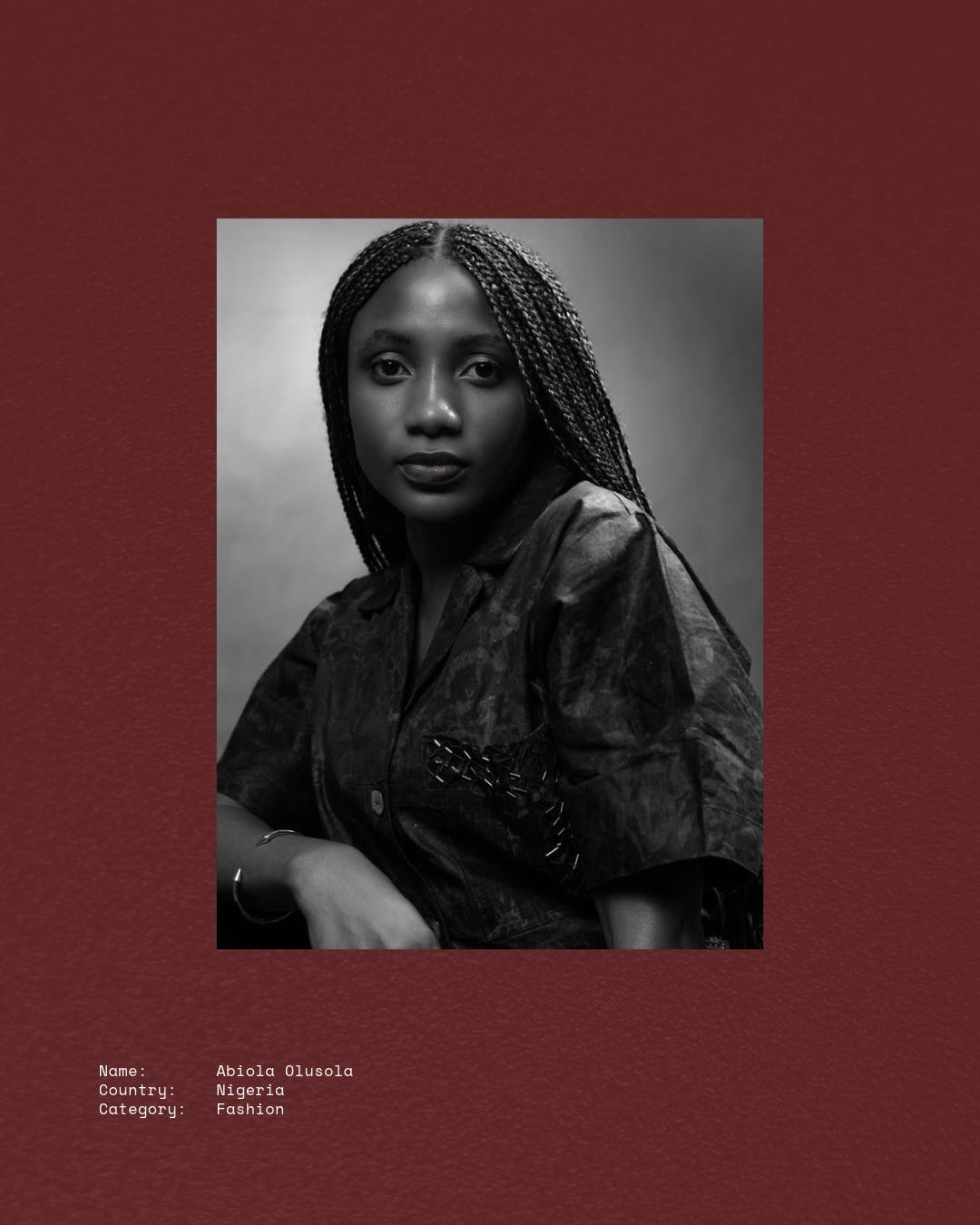
Abiola, what’s the hardest thing about working in fashion and running your own brand as a self-confessed shy person with a reserved demeanour?
The landscape has changed a lot and [the] business is all about visibility now. It can be tough for quieter personalities to thrive in this new landscape.
Do you ever feel your designs give voice to things that words or even your personality cannot fully express?
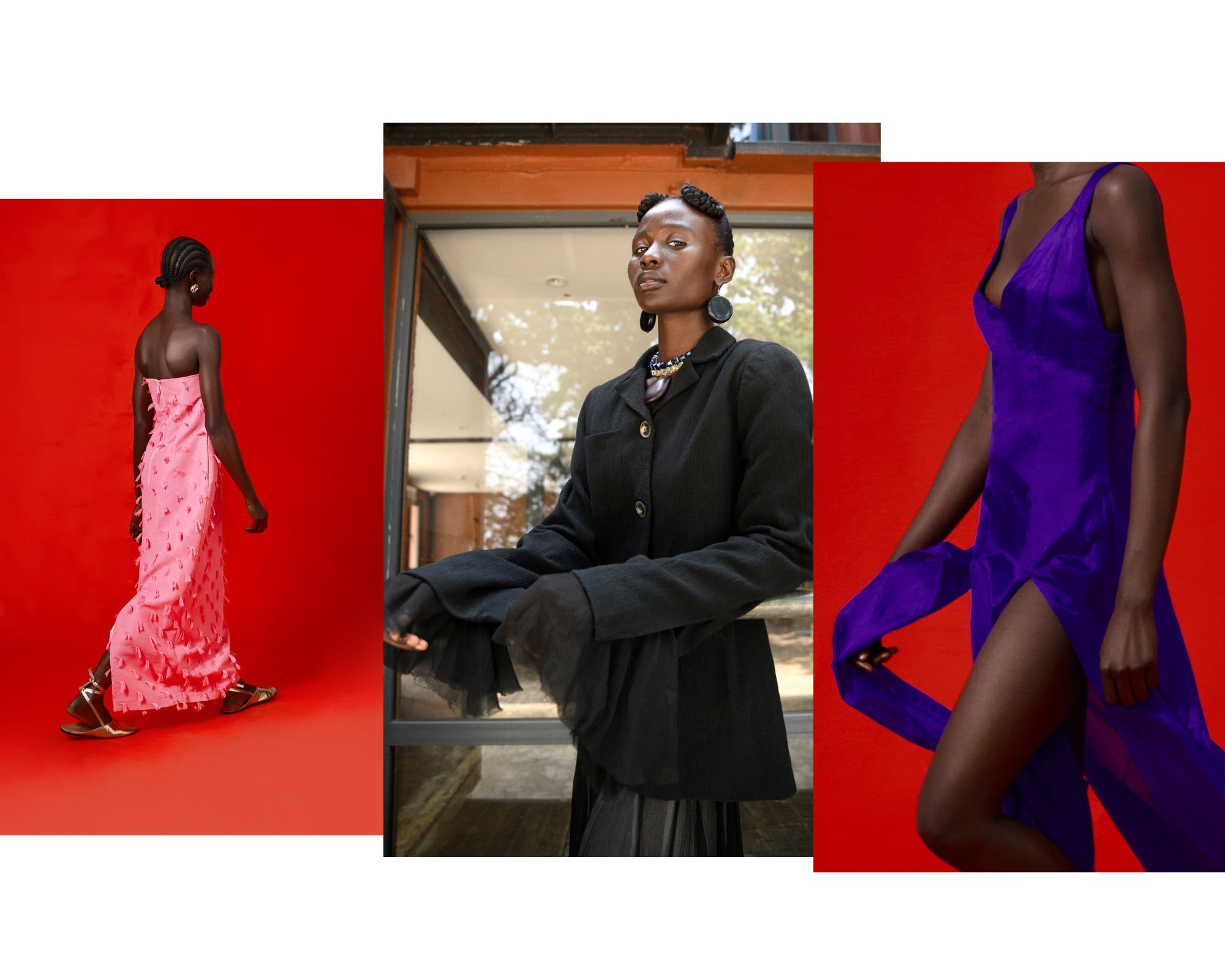
Absolutely, a collection can sometimes feel like a stream of consciousness; all the ideas, nuances, feelings that are poured into the work. It can be difficult even to share the ideas behind collections because it transforms so much during the course of research and design. Some things are intangible and we try to give them life through clothes.
Would you say creative ideas come easily to you?
Yes and no. Sometimes I’m too overwhelmed by the day to day realities of life to want to create. But most times, I’d remember the most random thing, or watch a film or documentary and be so taken by a character or an idea that I immediately have to write or sketch before I lose it.
So many things inspire me but I also think forming ideas is a muscle that needs constant exercise, you have to keep dreaming and writing and sketching things down otherwise you could lose that ability.
Growing up in a conservative and christian home in Ibadan, Nigeria in the 90s and early 2000s, did you ever feel the urge to leave in order to pursue your dreams in fashion?
Not at all. When we lived in Ibadan, I was young and loved the pace of life there — community, friends, and family. But I knew already that I loved fashion, I just didn’t think of it beyond watching fashion tv. It was not until much later in life when we were living in Lagos and I had graduated with a BA in English that I grew restless and wanted to travel, live in Europe, and chase my dreams.
You first graduated with a degree in English Literature and Philosophy in Nigeria then shortly after, moved to Paris where you received a second degree in fashion. At that point, did you have your life figured out and did know exactly what you wanted to do with it?
Absolutely not (laughs). I’m still figuring life out. After graduating from fashion school, I wanted to work at the big French fashion houses. That was my dream at the time.
Are you a person who likes to follow a strict mapped-out-plan?
No (laughs), I mostly figure things out as I go. I’m working on being more structured.
“Some things are intangible and we try to give them life through clothes.”
Going back, what’s the biggest lesson you learned from interning at Lanvin, Givenchy, and Paris Fashion Week?
I’d say how busy and intense fashion is and the importance of having various talented people and teams handling different parts of the machine.
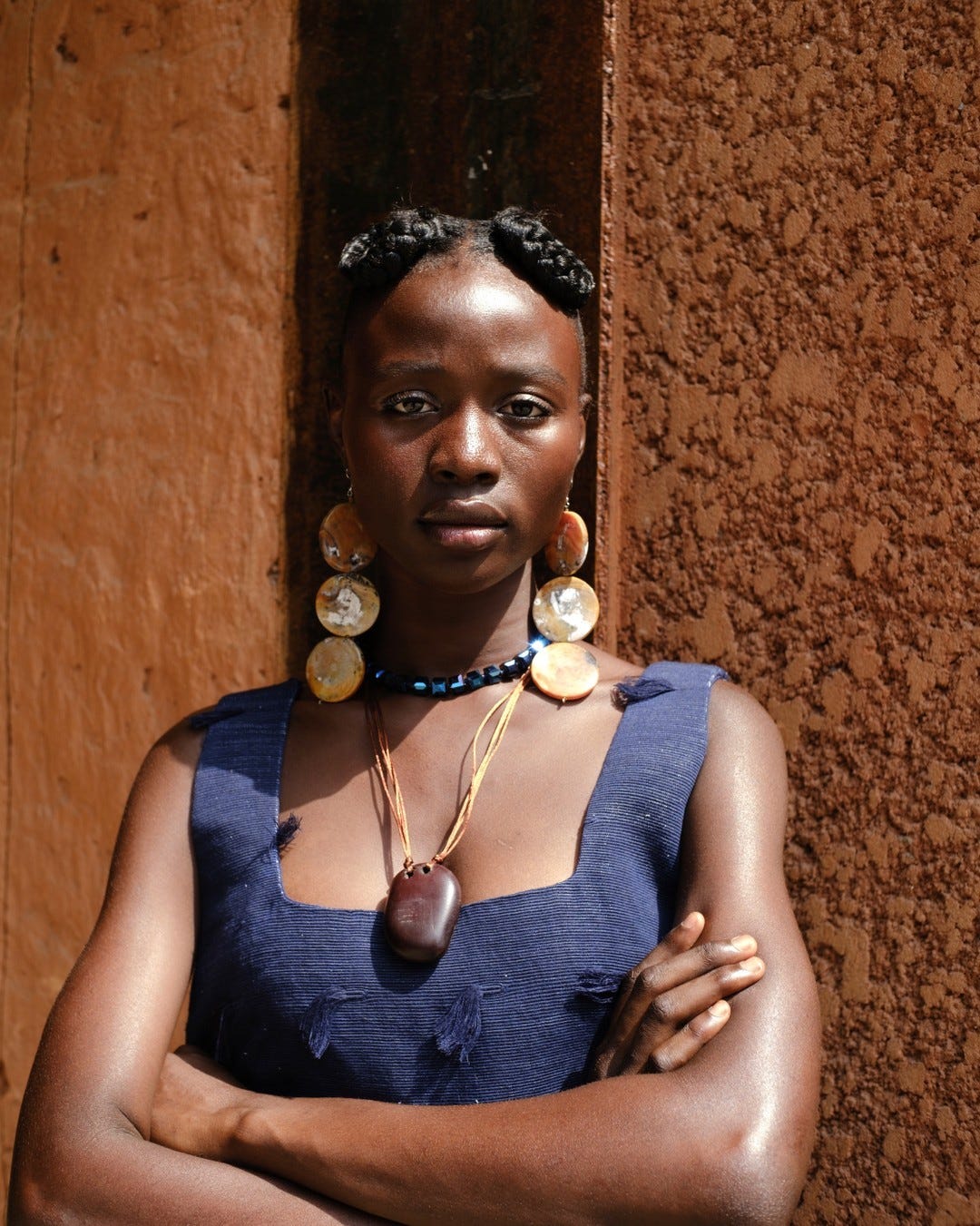
In the time I’ve worked with you, I’ve had people, from fashion designers to buyers marvel at your designs. I also know that your first collection in 2017 was hugely successful, led to your first fashion week showcase and having your garments stocked at Temple Muse among other accomplishments. Do you ever reflect on how deeply people admire your work?
I do, [and] one of the things I enjoyed the most when we [first] opened our studio in Lagos was meeting women who were always so happy to tell me how much they loved the brand. It’s the most rewarding part of the business for me. I’m inspired by the women that choose AO and I don’t take any of it for granted.
Whenever we discuss your work, I get the impression that you don’t treat it as your entire life. How important is it for you to maintain separation from your brand — even though it carries your name?
Interesting observation. It honestly isn’t my entire life. I try not to wrap my whole identity around the brand. I want people to see the brand and what it stands for and for the focus to always be on the output and not on me.
My ultimate goal is to be able to just design and have the business operate by itself. It does take a level of success for that to happen: I’m still working towards it.